 Products
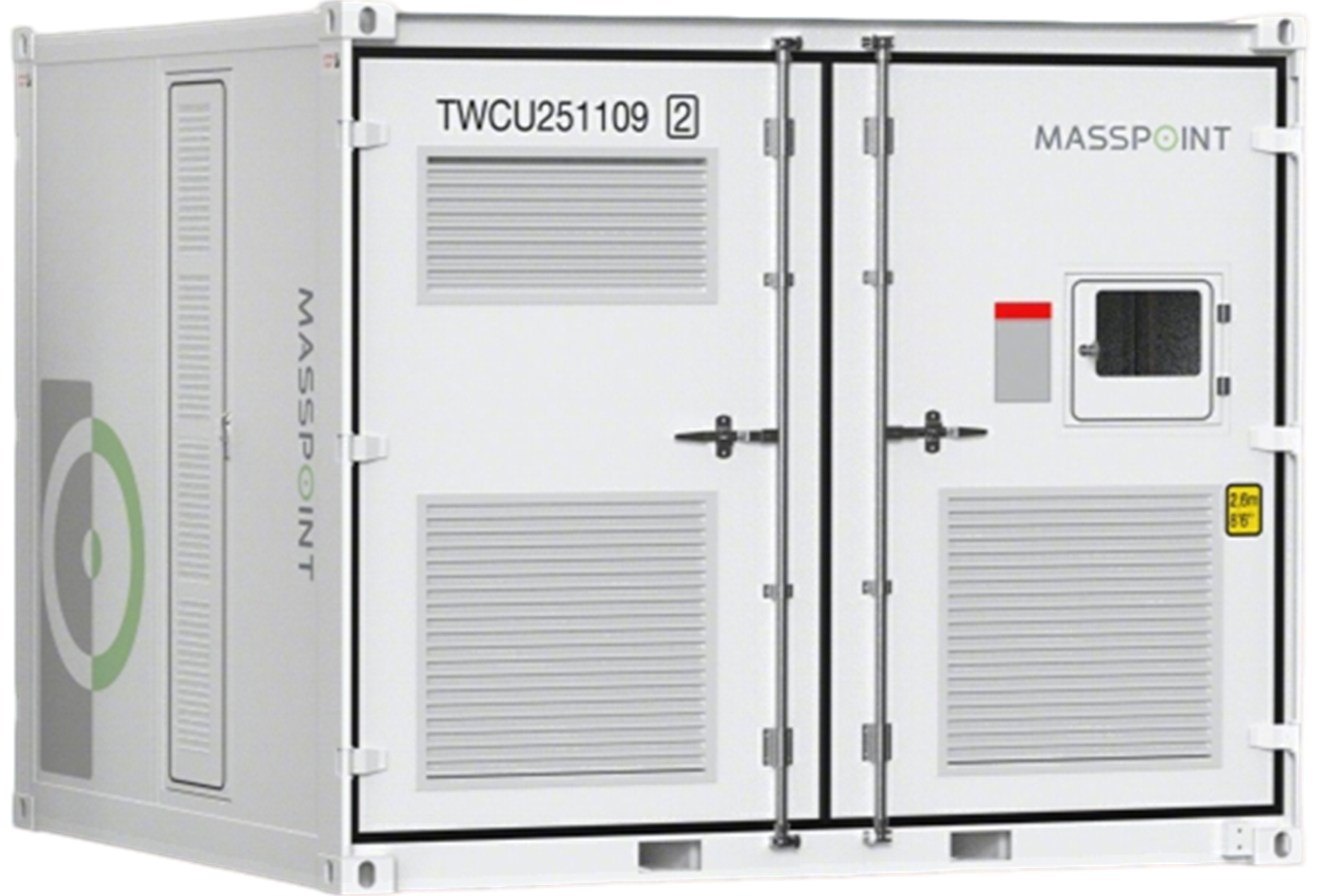 Industrial Hybrid BESS
 Hexa 125KW/241KWH-500KW/482KWH
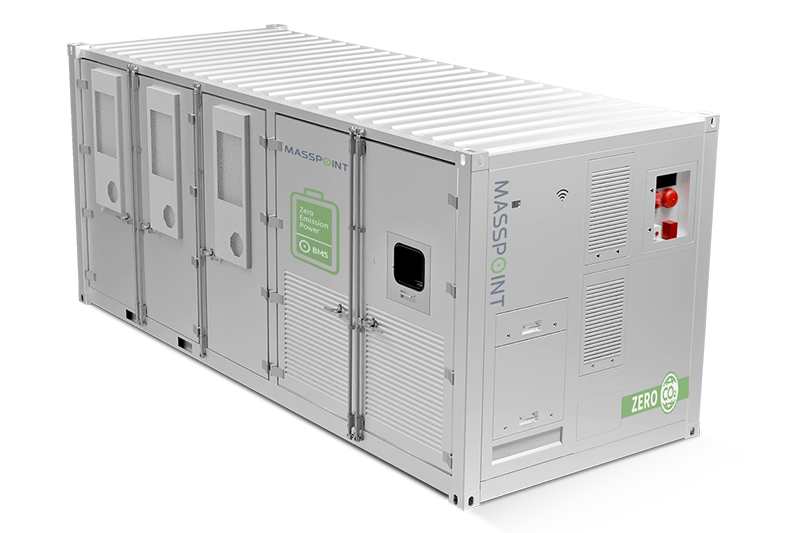 Micro-Grid BESS
Leave Your Message
China has really become a major hub for manufacturing industrial energy storage systems. These systems are used all over the world — by factories, utility companies, ports, and even renewable energy projects. The top companies there each compete in different ways, whether it’s developing better battery chemistries, thermal management techniques, smarter software, safety testing, or offering reliable long-term support. Names like CATL, BYD, Sungrow, EVE Energy, and HyperStrong all bring their own unique approaches to the table. So, their products aren’t exactly the same.
If you check out Industrial Battery Storage, you'll see that it can really help cut down on peak-demand charges and make better use of solar and wind energy. For example, a factory might store energy during cheaper off-peak hours and then use that stored power when its production lines are at their busiest. Sounds pretty straightforward, right? Well, there’s a bit more to it. Factors like site temperature, fire safety measures, grid regulations, maintenance access, and how batteries degrade over time can all impact the overall financial picture.
Imre Gyuk, who used to be the Director of the Energy Storage Research Program at the U.S. Department of Energy, once said, “Energy storage is the key to enabling the transition to a clean energy future.” And honestly, that idea still holds true. But if you’re in the market, don’t just look at capacity numbers and get wowed. It’s really important to dig deeper—look into how efficient the system is (round-trip efficiency), what warranties are offered, response times, safety certifications, and the track record of the supplier. Just because a battery is huge doesn’t mean it’s necessarily reliable.
This guide takes a closer look at China’s leading industrial energy storage manufacturers, based on both practical and technical points. We consider their experience in manufacturing, how well their systems integrate, the software support they provide, their export capabilities, and after-sales service. Of course, rankings are up for debate—and things change pretty quickly in this field. That’s why it’s crucial for project owners to verify their current certifications, ensure local compliance, and review actual operating data before signing anything.

A capable industrial energy storage manufacturer in China does more than assemble battery cabinets. It designs a complete system around factory loads, grid conditions, and safety requirements. Industrial Battery Storage Systems may include battery racks, inverters, cooling units, fire protection, and energy management software. Each part must work together during peak demand, outages, and daily cycling.
Practical experience matters. Engineers should understand high-temperature workshops, dusty production floors, and unstable power connections. During a site assessment, they should examine load curves, cable routes, ventilation, and emergency access. Small details matter. A poorly placed temperature sensor can hide uneven heating inside a cabinet. Reliable manufacturers use traceable cells, documented quality checks, and repeated charge-discharge testing. They also explain limits instead of promising unrealistic savings.
Certification supports trust, but it does not replace engineering judgment. Buyers should review test records, warranty conditions, software controls, and service response times. Factory acceptance tests can reveal wiring errors before shipment. Field support is equally important, especially when equipment operates far from major cities. No manufacturer is perfect. Even a well-designed system may require software adjustments after real operating data arrives. That weakness deserves honest discussion, not polished sales language. A dependable Chinese manufacturer remains transparent about risks, maintenance intervals, replacement parts, and long-term performance.
A practical evaluation framework based on commonly used industrial energy storage specifications, manufacturing capabilities, safety requirements, and verification practices.
| Evaluation Dimension | Typical Industrial Benchmark | What a Qualified Manufacturer Should Demonstrate | Why It Matters |
|---|---|---|---|
| Manufacturing Scale | Dedicated production lines with documented quality control and traceability | Production records, serial-number tracking, incoming-material inspection, in-process testing, and final inspection procedures | Consistent manufacturing reduces quality variation and improves long-term project reliability. |
| Battery Chemistry | Lithium Iron Phosphate (LFP) | Validated cell specifications, battery-management-system compatibility, thermal data, and independent test documentation | LFP is widely used in stationary storage because of its thermal stability, long cycle life, and lower reliance on nickel and cobalt. |
| System Capacity | From hundreds of kilowatt-hours to multi-megawatt-hour containerized systems | Modular architecture, scalable battery racks, clear capacity calculations, and site-specific expansion options | Modularity allows systems to match different industrial loads, site constraints, and investment phases. |
| Power Rating | AC power configured for peak shaving, load shifting, backup, or renewable integration | Documented inverter rating, overload capability, ramp-rate performance, and grid-connection parameters | The correct power rating determines how effectively the system manages demand peaks and fast-changing industrial loads. |
| Round-Trip Efficiency | Approximately 85%–92% at system level, depending on operating conditions | Test results showing the measurement boundary, operating temperature, state-of-charge range, auxiliary consumption, and charge/discharge power | Higher efficiency reduces electricity losses and improves the economic return of daily cycling. |
| Cycle Life | Typically 4,000–8,000 cycles for LFP systems under defined test conditions | Cycle-life test conditions, end-of-life definition, depth-of-discharge range, temperature, charging rate, and degradation model | Cycle life must be assessed together with operating conditions rather than as an isolated headline figure. |
| Battery Management System | Cell, module, rack, and system-level monitoring with protective controls | Voltage and temperature monitoring, state-of-charge estimation, balancing, fault logging, isolation control, and communication protocols | A well-designed BMS helps prevent overcharge, over-discharge, overheating, and abnormal operating conditions. |
| Thermal Management | Air cooling or liquid cooling selected according to energy density and project conditions | Thermal simulation, temperature-uniformity data, cooling redundancy, HVAC performance, and operating-temperature limits | Stable temperature control improves battery life, efficiency, safety, and usable capacity. |
| Fire and Safety Protection | Multi-layer protection combining detection, suppression, ventilation, isolation, and emergency shutdown | Gas and smoke detection, thermal sensing, fire-suppression design, pressure-relief provisions, emergency procedures, and relevant test reports | Industrial systems require protection against thermal runaway propagation and other electrical or environmental hazards. |
| Ingress and Environmental Protection | IP54 or higher for many outdoor enclosures, subject to project design | Enclosure test documentation, corrosion protection, humidity control, operating-temperature range, and altitude limitations | Environmental protection affects system availability in outdoor, coastal, dusty, hot, or cold industrial locations. |
| Electrical Safety Compliance | Design aligned with applicable international and local electrical-storage requirements | Applicable reports or certifications such as IEC 62619, IEC 63056, IEC 62477-1, UL 9540, UL 9540A, NFPA 855, or local grid requirements where relevant | Compliance supports safer deployment, permitting, insurance review, and grid interconnection. |
| Power Conversion System | Bidirectional PCS with grid-following and, where required, grid-forming functions | Reactive-power capability, power-factor control, harmonic performance, black-start capability, islanding protection, and communication interfaces | The PCS determines how the storage system interacts with industrial equipment, renewable generation, and the utility grid. |
| Energy Management System | Real-time monitoring with automatic dispatch and operating-strategy configuration | Peak-demand control, time-of-use scheduling, renewable self-consumption, alarm management, data logging, dashboards, and remote access controls | An effective EMS converts battery capacity into measurable savings and operational flexibility. |
| Grid Compatibility | Support for the voltage, frequency, protection, and communication requirements of the target market | Grid-code test results, protection coordination studies, transformer specifications, metering design, and utility approval documentation | Grid compatibility reduces commissioning delays and prevents interference with facility or utility operations. |
| Factory Acceptance Testing | Functional, electrical, communication, safety, and performance testing before shipment | FAT procedures, test records, alarm simulations, insulation tests, capacity checks, communication checks, and customer approval points | Factory testing identifies defects before equipment reaches the project site. |
| Warranty and Degradation Support | Performance warranty structured around time, throughput, cycles, and remaining capacity | Clearly defined warranty exclusions, degradation curves, operating limits, response times, spare-parts policy, and service responsibilities | Transparent warranty terms make lifecycle costs and expected project performance easier to evaluate. |
| After-Sales Service | Remote monitoring plus trained field-service and commissioning support | Service-level agreements, spare-parts availability, troubleshooting procedures, software-update policy, training, and local support coverage | Fast technical support improves uptime and reduces the financial impact of unexpected faults. |
| Project Customization | System design adapted to load profile, climate, tariff structure, site layout, and operating strategy | Load analysis, single-line diagrams, energy simulations, civil and electrical interfaces, fire-protection plans, and commissioning schedules | Industrial energy storage is not a one-size-fits-all product; project-specific engineering directly affects performance. |
Note: Benchmark values are indicative industry ranges. Actual performance depends on cell selection, system architecture, ambient conditions, depth of discharge, charging and discharging power, auxiliary consumption, and applicable local standards.
The NX10 Microgrid BESS is a smart factory-to-grid solution designed to deliver clean, stable, and flexible power for modern energy needs. By integrating solar photovoltaic generation, battery storage, and generator sets within one coordinated platform, it helps factories and remote facilities improve energy resilience while reducing dependence on conventional fuel-based power. Its modular architecture can adapt to different site conditions, making it suitable for industrial operations, off-grid locations, and areas affected by unreliable grid connections.
A key advantage of the NX10 system is its flexible PV coupling design, which supports AC-coupled solar integration without requiring a complete overhaul of existing electrical infrastructure. This allows users to expand renewable generation according to project requirements, available space, and future energy plans. Advanced energy management functions provide real-time monitoring and intuitive control, enabling operators to balance solar power, stored energy, grid electricity, and generator output efficiently.
With intelligent dispatch and dependable backup capability, the system can maintain essential operations during outages or fluctuating power conditions. It also helps lower emissions, fuel consumption, and operating noise, creating a more sustainable and comfortable working environment. From factory energy management to remote microgrid deployment, the NX10 platform offers an efficient pathway toward reliable, low-carbon power.
: It provides an integrated system, not only battery cabinets. Components may include racks, inverters, cooling, fire protection, and energy management software.
Engineers should review load curves, cable routes, ventilation, power stability, and emergency access. Dust, heat, and cramped spaces can affect performance.
Poor sensor placement may hide uneven heating inside a battery cabinet. Accurate monitoring supports safer operation and better maintenance decisions.
Ask for traceable cell records, documented inspections, charge-discharge tests, and factory acceptance results. Written evidence is useful.
No. Certification supports trust, but it cannot replace site-specific engineering judgment, testing, and careful system design.
Check transport, commissioning, software costs, spare parts, local electrical work, and maintenance. The lowest equipment price may not be the lowest project cost.
Compare usable energy, not just the nameplate value. Reserve settings, temperature limits, and battery degradation can reduce actual output.
Request response times, remote monitoring plans, replacement procedures, technician availability, and warranty conditions. Service can prevent costly delays.
Testing should check alarms, emergency shutdowns, fire protection, grid communication, wiring, and system performance before regular operation.
Yes. Real operating data may reveal software or control issues. Honest suppliers explain these limits instead of promising perfect savings.
China’s industrial energy storage sector is developing rapidly, supported by strong manufacturing capabilities, advanced battery technologies, and growing demand for reliable, flexible power solutions. This article explains what defines an Industrial Energy Storage manufacturer in China, including engineering expertise, production capacity, quality control, system integration, and after-sales service. It also introduces the main types of suppliers and examines core technologies such as lithium-based batteries, battery management systems, energy management platforms, thermal control, and safety protection.
The discussion covers applications in factories, warehouses, commercial buildings, renewable energy projects, and peak-demand management. It also provides practical guidance for comparing manufacturers based on safety certifications, system reliability, lifecycle performance, capacity, pricing, delivery capabilities, and technical support. Finally, the article explores market trends including smarter energy management, improved battery safety, renewable energy integration, modular system design, and the growing importance of sustainable, cost-effective solutions for industrial and commercial users.